
A Smart Way to Support Weak or Split Trees Without Removing Them
Tree cabling is the right solution when a tree has weak branches, a split trunk, or heavy limbs that could break during strong wind or storms. It adds support and reduces stress on the tree. Instead of cutting the tree down, cabling helps it stay standing and safe. This is often a good choice when you want to save a large, healthy tree that has structural problems but is still worth keeping.
Quick Decision Answer
You should choose tree cabling when the tree is valuable, mostly healthy, and the issue can be supported instead of removed. If the tree is dead, rotting inside, or leaning badly, removal may be the safer option. Cabling works best for mature trees with heavy limbs or narrow branch angles that are at risk of splitting.
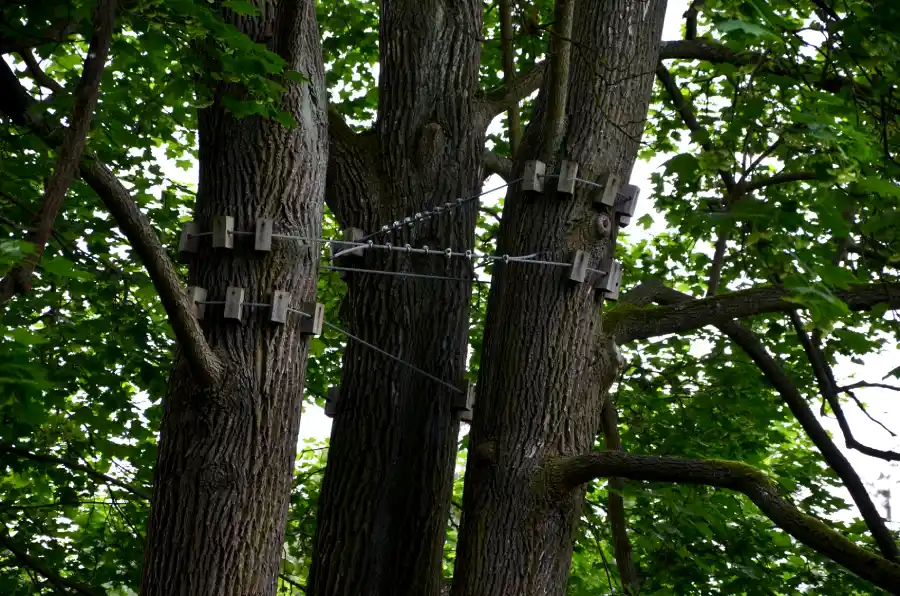
Tree Cabling Vs Tree Removal
Many homeowners struggle with this choice. Should you support the tree or take it down? The answer depends on safety and tree health.
- Tree cabling: Adds steel cables high in the canopy to reduce movement.
- Tree removal: Cuts the entire tree down to remove all risk.
Cabling helps manage risk while keeping the tree. Removal removes the risk completely but also removes shade, beauty, and value from your yard.
Pros and Cons of Tree Cabling
Before deciding, it helps to look at the good and the bad.
- Pros:
- Saves a mature tree
- Costs less than full removal in many cases
- Maintains shade and curb appeal
- Reduces risk of branch failure
- Cons:
- Does not make a tree 100 percent risk-free
- Needs inspections over time
- Not suitable for severely damaged trees
Tree cabling is part of professional tree services. It works best as a risk-reduction tool, not a cure for every tree problem.
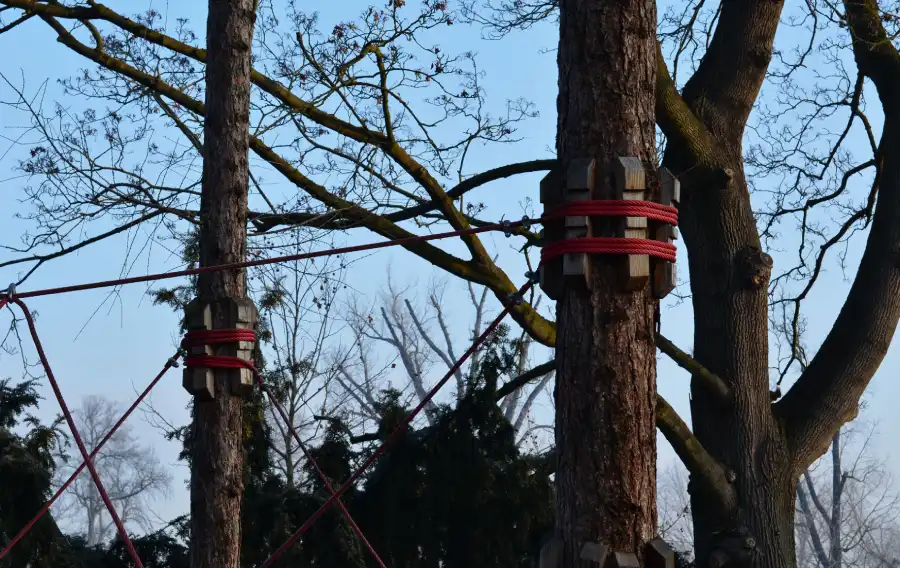
Best Fit by Situation
Here are common cases where tree cabling makes sense:
- A large tree has two trunks forming a tight V shape
- One heavy limb stretches over a house or driveway
- A previous storm caused a crack but the tree is stable
- You want to protect a historic or sentimental tree
It is often used on oak, maple, or other hardwood trees that grow wide and heavy. These trees may live for decades, so reinforcing them can be a smart long-term choice.
Tree cabling may not be right if:
- The trunk is hollow or rotting inside
- Roots are damaged or lifting from the soil
- The tree is leaning more each year
- More than half the canopy is dead
In those cases, removal may be safer.
Mistakes People Make When Choosing
One common mistake is waiting too long. A small crack can grow over time. Early support often works better than waiting until the split gets worse.
Another mistake is assuming cables fix everything. Cables reduce stress. They do not heal decay or root damage. A full inspection matters before making a choice.
Some homeowners also try DIY fixes, like wrapping rope or chain around branches. This can damage the bark and make the problem worse. Tree cabling requires proper hardware and placement high in the canopy.
Final Decision Checklist
Ask yourself these simple questions:
- Is the tree mostly healthy?
- Is the problem limited to weak limbs or a split union?
- Would losing the tree impact shade or property value?
- Has a trained arborist checked the tree?
If you answer yes to most of these, tree cabling may be the right step. It offers support while keeping your landscape intact.
Talk With a Local Tree Support Expert
If you have a tree in Spokane Valley, WA that looks like it may split or drop a large limb, we can inspect it and explain your options. At Mcelfish Tree Care, we install tree cabling systems that help reduce risk while protecting the health of your trees. Call us at (509) 723-9044 to schedule an evaluation and let us help you decide the safest path for your property.